
Lessons from running a successful, non-technical AI hackathon


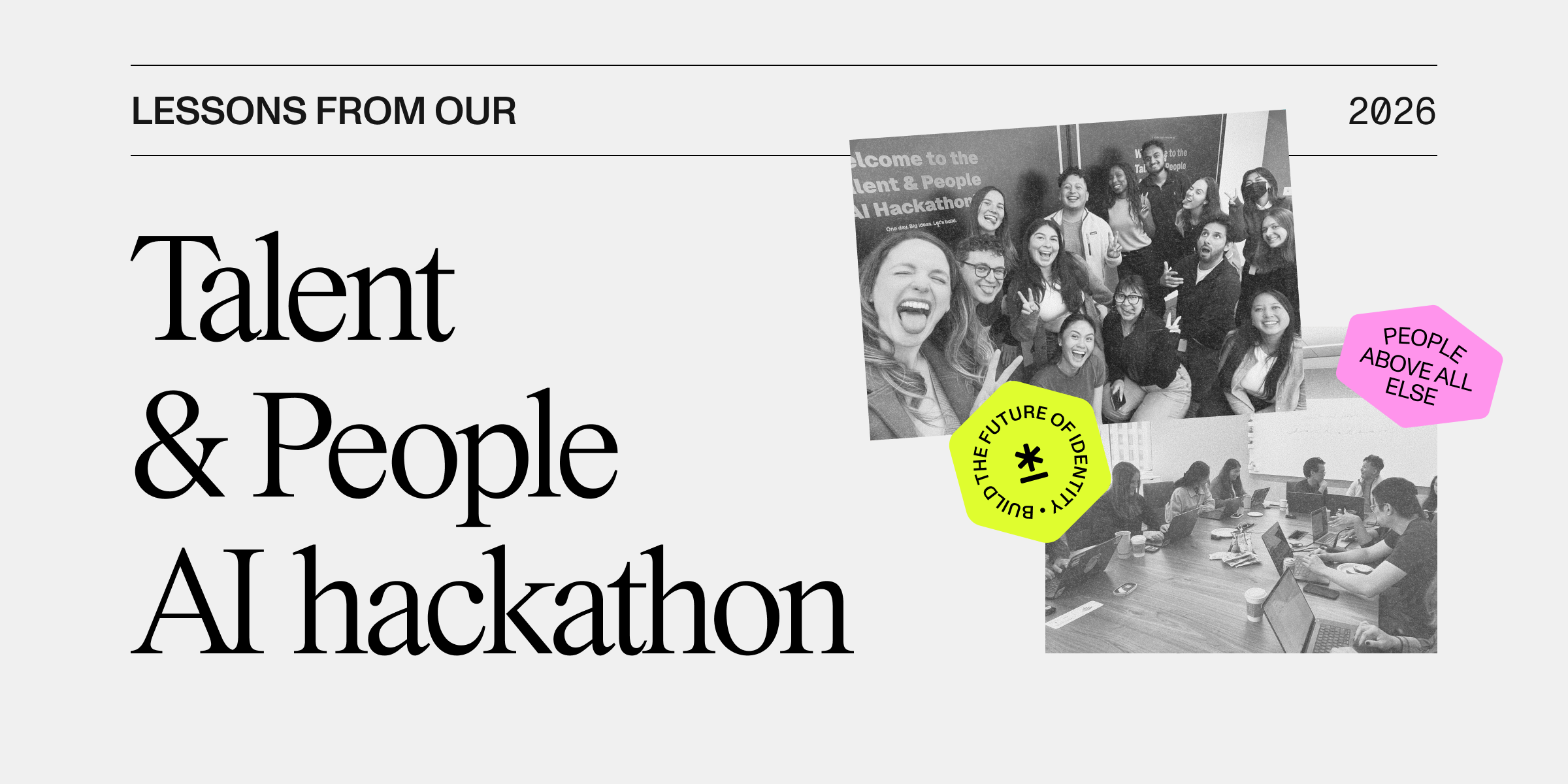


AI hackathons are all the rage right now. Ramp ran a successful company-wide Hackathon in April. The Chief Customer Officer at Canva wrote about a weeklong experiment that didn’t go quite as well as planned.
At Persona, we’ve had several company-wide hackathons. And smaller teams are also setting aside time to build apps and automations to address unique problems and opportunities.
Michael Yang, AI program manager at Persona, sat down with the head of talent, Natalie Disraeli, to talk about her experience planning and running a successful AI hackathon for her non-technical team.
Michael: The Talent and People Ops team built 10 working software tools in one day. How and why did you organize the hackathon?
Natalie: There are a few reasons I wanted to host a hackathon.
The tools available right now are genuinely different from six months ago. People who aren’t technical, like me, can move a lot faster and build things we used to have to outsource or lean on engineering for. I wanted to take advantage of that moment.
But more than anything, I wanted to give my team a real opportunity to build skills that will matter in their careers. If you want to level up right now, you need to be at least dangerous with these AI tools, even if you’re not learning to code from scratch. It’s just where things are going.
I was also just looking for something fun to do as a team. Recruiting is really busy right now, we have some new hires on the team, and I wanted an excuse to work on projects together.
Most of your team aren’t engineers. How did that shape the experience?
The prep made a huge difference. Everyone on the Talent and People Ops teams submitted project proposals ahead of time, and we mapped out the best flow for each project. They also met with an engineer and someone from tech ops ahead of time to make sure all the systems were installed. That probably saved us hours on the actual day.
Most teams used Claude.ai to brainstorm, Claude Design to prototype, and Claude Code to build. Everything got deployed as Cloudflare apps with dummy data, and we’ll make them private once real candidate or employee data is added.
I also went through the whole build flow myself beforehand, and I used what I learned to make sure everyone was set up before the day.
I'd tell any team lead thinking about doing this that the setup is the most important part. If you show up on the day hoping to figure it out, you'll spend half your time on logistics. The magic happens when people can just build.
Getting to focus on one thing without worrying about meetings and context-switching was also really important. I think people surprised themselves with what they were capable of during one day. I was also pleasantly surprised that we didn’t need more engineering help. So much of what we built, including the backend pieces, came together in a way I didn’t anticipate.
Walk me through what the day actually looked like
On the day itself, we had pastries and coffee in the morning, and then we got started:
Kickoff: There were two guest speakers at the hackathon. Vincent, one of our product leads, talked about our internal AI tooling and what we’re building as a company. Then Rey, our lead mentor from engineering, walked everyone through the day’s flow and gave tips for vibe coding.
Working blocks with mentors: We had two working blocks with engineering and design mentors. The engineers were really helpful for backend work and troubleshooting. Designers helped teams pull in visual inspiration and mood boards that people uploaded directly into Claude Code. No one was doing the work for people, but having them in the room meant no one got stuck for long.
Breaks: We made sure the day was blocked off so people could focus, but it wasn’t nonstop staring at screens. Someone led a stretch break mid-morning, and a group walked over to Salesforce Park to get some fresh air.
The day ended with demos at 4 p.m. There were mentors and a few executives in the room, including our CEO, Rick.
What did the teams end up building?
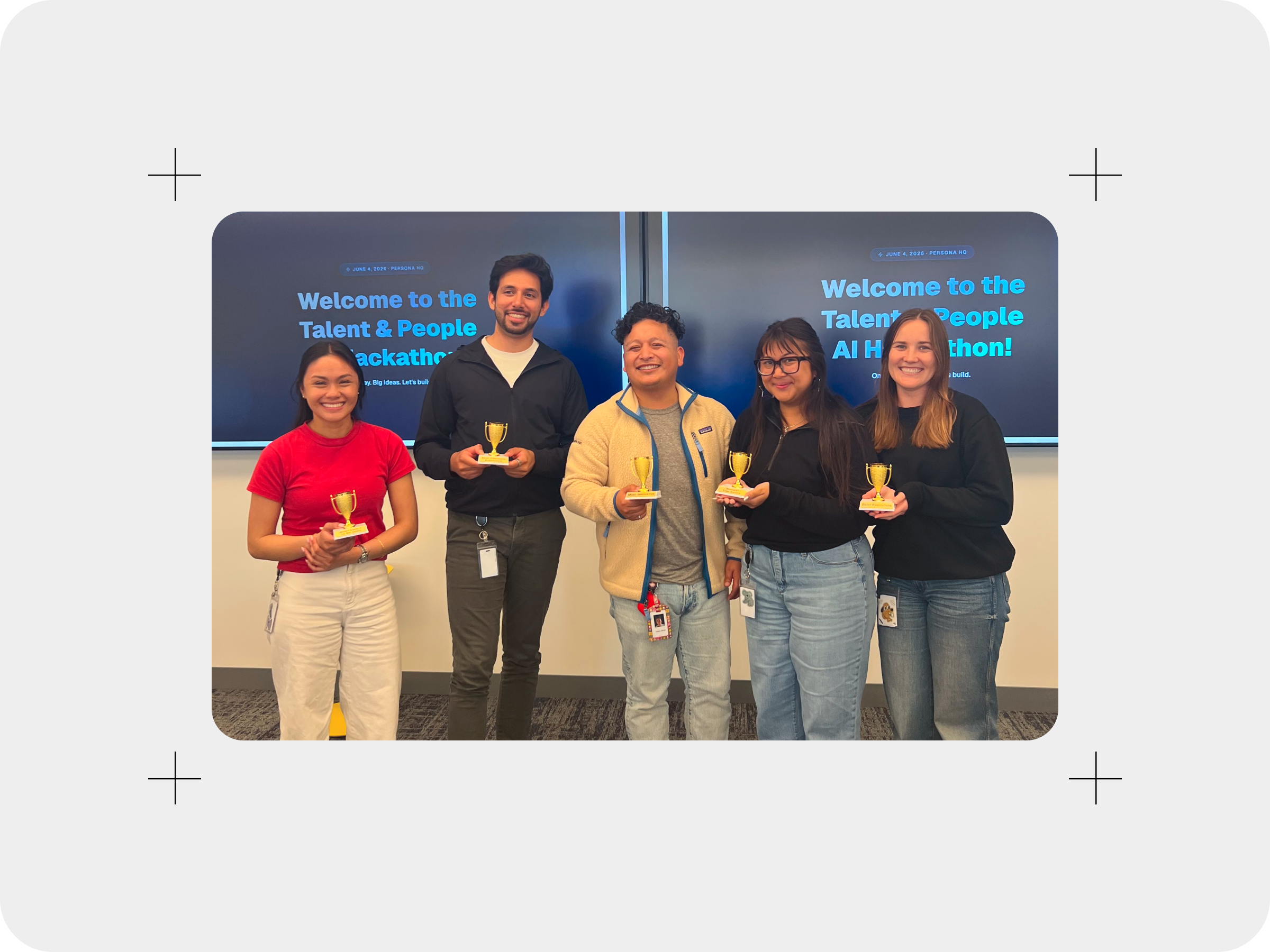
The teams worked on 10 different projects, and we awarded five winners at the end of the day:
Recognition Tool (Most Innovative): An app that creatively addresses recognition at Persona in a way that aligns with our fun and playful culture. For example, teammates can send each other virtual cookies and appreciation notes. Employees can watch their cookie jar fill up, and then redeem them in a private Persona marketplace.
Candidate Portal (Best Candidate Experience): A custom-branded web portal that connects directly to our ATS, Ashby, and gives candidates real-time visibility into where they are in the process. Candidates can access it via a link in their recruiting emails, verify their identity (using Persona’s product!), and see their current pipeline stage. They can also submit interview availability directly into Ashby from the app and access prep materials tailored to their specific role.
Onsite Dashboard (Most Likely to be Used): A scheduling dashboard that gives the Talent team full visibility into onsite interviews and serves as a live checklist throughout the scheduling process. We create a special onsite experience for candidates, and that means there are a lot of things that need to get done, in a certain order, throughout the day.
Offer Bot (Biggest Time Saver): A bot that uses input from a recruiter to generate a fully formatted and branded offer letter. It creates a PDF version automatically, which saves recruiters even more time.
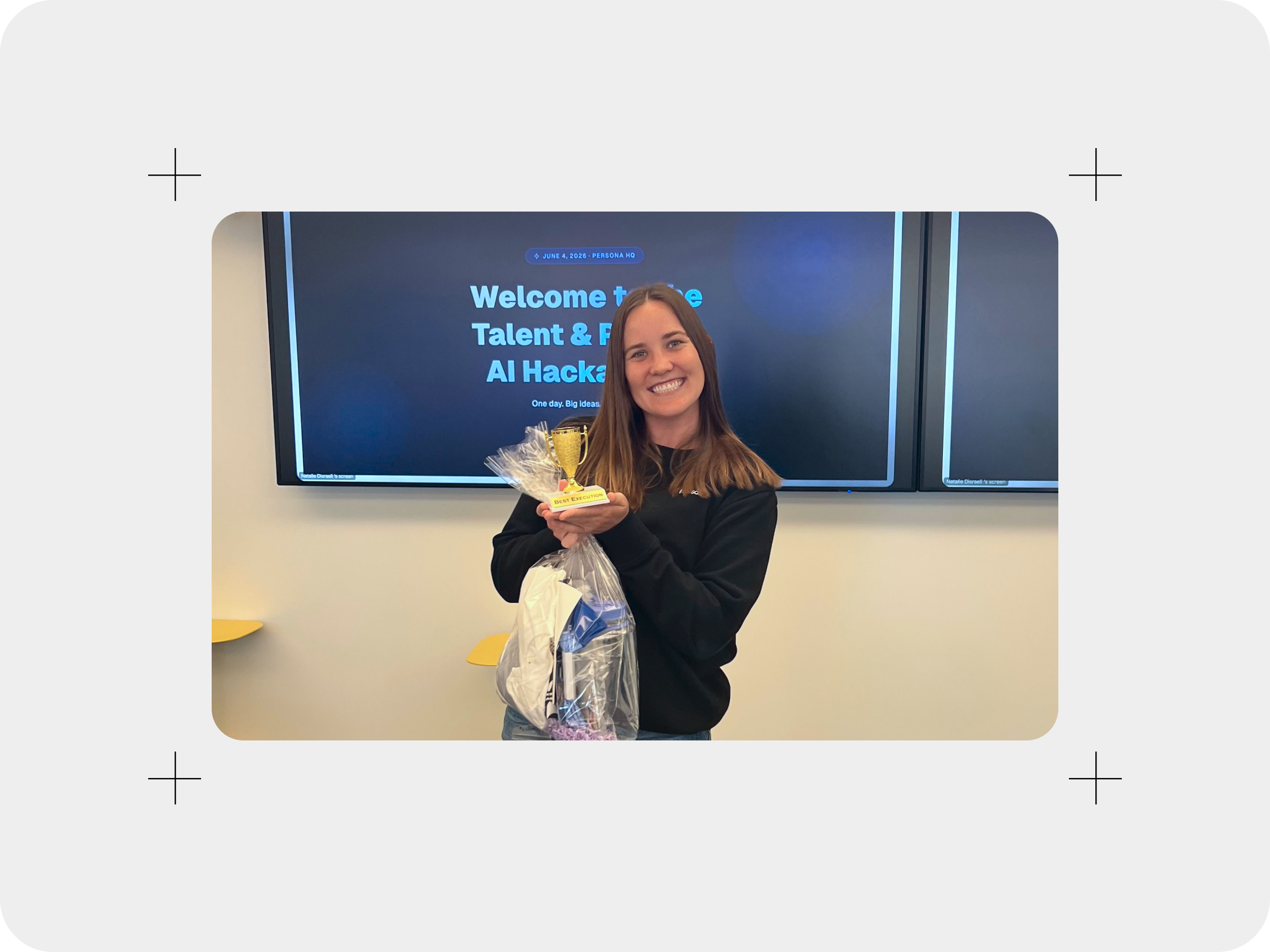
New Hire Onboarding Hub (Best Execution): An interactive Week One experience creator that replaces our manual process of duplicating and customizing Notion checklists for every new hire. Now, new hires land on a branded page, answer five quick questions, and instantly get a tailored onboarding experience. They also get access to a custom AI agent that answers questions or routes them to the right person.
Two other apps that were really interesting are a new Manager Dashboard that managers can use to plan customer account coverage when their direct reports are on PTO. That one is actually being used by some managers already. We’re also actively looking into launching a new references portal that was built during the hackathon.
What would you do differently next time?
Next time, I’d build in more check-in moments so teams could watch and learn from each other throughout the day. The demos were impressive, but the process is as worth sharing as the outcome.
I’d also probably skip some of the prototyping steps and have people dive into Claude Code earlier. Designing and brainstorming are important, but I think people would’ve had more time if they had created still images of their vision rather than a working prototype. Then, they could iterate on the images rather than having to build new prototypes from scratch.
What’s one thing you got right that you’d tell another talent leader to steal?
I had AI baked into our 2026 talent vision from January, so this wasn’t a random initiative that came out of nowhere.
I also put in a lot of hours before this happened, including time outside of work, building up my own skills. You can't ask your team to invest in learning AI if you're not doing it yourself.
People can tell the difference between a leader who’s genuinely bought in and one who is just passing along a narrative from senior leadership. Invest in your own learning first, and everything else follows from that.
What would you say to a talent leader who’s on the fence?
If you’re on the fence, just do it! Your team is watching what you prioritize. If you want them to grow, you have to create the conditions for growth and then get out of the way. This was one of the best days I’ve had with my team, and we came out of it with real tools we’re actually using.
A closing note from Michael
I’ve helped many Personerds with various AI projects. The biggest challenge isn’t the tools or knowledge. It’s a lack of time. Other urgent priorities come up, and ideas or early vibe-coded apps never quite get ready for prime time. It’s an even bigger challenge for people with less technical experience, because there’s a steeper learning curve and they might run out of time (or steam) just dealing with initial barriers.
Natalie solved this for her team by carving out time for them and getting dedicated help. It was really exciting to see people who had never opened the terminal turn their ideas into reality so quickly. And now that they’re over the initial hump, they’re empowered to come up with even more solutions to address everyday wants and problems.
I know, because I can see from our usage data that the people who participated in the hackathon haven’t stopped vibe coding! I’m looking forward to seeing what they build next.
The information provided is not intended to constitute legal advice; all information provided is for general informational purposes only and may not constitute the most up-to-date information. Any links to other third-party websites are only for the convenience of the reader.